Why SEO Trend Analysis Matters for Long-Term Rankings
Most people treat SEO like a set-it-and-forget-it chore. You optimize a page, build a few backlinks, and hope for the best. But search engines don't stay still. Google updates its algorithms hundreds of times a year, and user behavior shifts just as fast. That is why regular seo trend analysis is no longer optional if you want to keep your rankings stable.
I have spent the last decade working on organic search for sites ranging from small e-commerce stores to large publishing networks. What I have learned is that the sites that hold their positions are the ones that watch the signals. They do not react after a drop. They catch the shift early. This article walks through the practical side of monitoring those signals and what to do when you see a change.
What SEO Trend Analysis Actually Looks Like
When people hear the phrase "trend analysis" they often imagine complex dashboards and machine learning models. And those tools exist. But at its core, seo trend analysis means comparing your performance data over time and asking why something moved. It is a diagnostic habit, not a report you run once a quarter.
For example, I once worked with a site that saw a sudden drop in traffic for a set of informational queries. The immediate reaction was to check backlinks or on-page content. But when we looked at the SERP volatility for those terms, we saw that Google had started showing featured snippets where plain results used to appear. The site had good content, but it was not structured to win the snippet. That is a trend you can only spot if you are watching the SERP landscape, not just your own rankings.
The same logic applies to core web vitals. If you monitor your page speed scores over several months, you may notice that certain page types degrade after a plugin update or a server migration. A one-time speed test would miss that. Trend analysis catches the drift.
Reading the Signals That Matter
Not every ranking change is a sign of trouble. Some are seasonal. Some are the result of Google testing a new layout. The hard part is knowing which ones to act on. That is where the right data sources come in.

Rank Tracking and SERP Volatility
Rank tracking tools like RankGear, Ahrefs, and Semrush give you daily positions for your target keywords. But raw rankings are noisy. A keyword can bounce three positions in a week for reasons that have nothing to do with your content quality. The useful signal is the trend line over several weeks, combined with SERP volatility data.
SERP volatility measures how often the search results themselves change. If you see high volatility for your niche while your own rankings stay flat, that usually means Google is testing new features or a ranking algorithm update. In those moments, the best move is to wait and watch. Do not rewrite pages based on two days of data. Let the trend settle.
On the other hand, if your rankings drop during a period of low volatility, something on your side probably broke. Maybe a page lost internal links, or a competitor published a better resource. That is when you dig into content gap analysis and keyword difficulty to understand the competitive landscape.
Search Intent Shifts
Search intent can change over time, especially for broad terms. What people wanted from a query in 2020 may not match what they want today. I have seen this happen with "best running shoes" style queries. Three years ago the top results were listicles. Now Google often shows a mix of video reviews and buying guides.
If you are not monitoring the intent behind your target keywords, you may be optimizing for the wrong format. Passage indexing makes this even more important, because Google can now pull a specific paragraph from a long article and rank it separately. If your content answers the question clearly in a single passage, you can win traffic even if your page is not the top overall result.
Tools like Moz and Google Search Console can help you see which queries actually bring clicks versus impressions. If you see a high impression count but low clicks, the intent may have shifted. Maybe users are finding the answer directly in a featured snippet or a knowledge panel. That is a form of zero-click search, and it is becoming more common every year.
Practical Steps for Ongoing Trend Work
You do not need a data science team to do seo trend analysis. You need a consistent process. Here is what I recommend based on what has worked across multiple projects.
- Set a baseline. Export your current rankings, traffic, and conversion data for your core pages. Use a tool like RankGear or Semrush to capture keyword difficulty and search volume for each term. This is your starting point.
- Monitor weekly, not daily. Check rank tracking data once a week. Daily checks lead to overreaction. Weekly gives you a cleaner trend line.
- Note SERP changes. Record when a featured snippet appears or when Google adds a video carousel to your niche. These changes affect click-through rates even if your ranking stays the same.
- Review intent annually. For your top 20 pages, re-evaluate the search intent behind the target keyword. If the SERP now shows a different format, update your content to match.
- Compare with competitors. Use content gap analysis to find topics your competitors rank for that you do not. Focus on queries where keyword difficulty is moderate and search intent aligns with your site.
These steps are not glamorous. They are the kind of maintenance work that keeps a site healthy for years.
The Role of Algorithm Updates and Machine Learning
Google's ranking system now relies heavily on machine learning models like RankBrain and BERT. These models interpret the meaning behind words, not just the presence of keywords. That means traditional on-page optimization still matters, but the way Google understands relevance has changed.
The helpful content system is another layer. It rewards content that demonstrates first-hand expertise and genuine usefulness. If your pages are thin, rewritten from other sources, or stuffed with keywords, that system will hold you back regardless of your backlink profile.
PageRank is still a factor, but it is no longer the dominant one. Backlinks matter less than they did a decade ago, especially for informational queries. Google is better at evaluating the quality of a page directly through metrics like core web vitals and passage indexing. That does not mean you should stop building links. It means you should prioritize content quality and user experience at the same level.
When to Trust the Data and When to Trust Your Gut
SEO trend analysis gives you data. But data is never clean. You will face situations where the numbers say one thing and your experience says another. In those moments, I have learned to trust the trend over the spike.
For example, a client once saw a 20% traffic drop for a single page after a small text change. The immediate reaction was to revert the change. But when we looked at the two-week trend, the page had been declining before the edit. The edit was not the cause. The real issue was that Google had started showing a featured snippet from a competitor. If we had reverted the change, we would have missed the real problem.
That is the value of watching the broader picture. A single data point is noise. A pattern is a signal.
Tools That Help, Not Hinder
There are many tools for trend work, and each has strengths. I keep a short list that covers the basics without overwhelming the workflow.
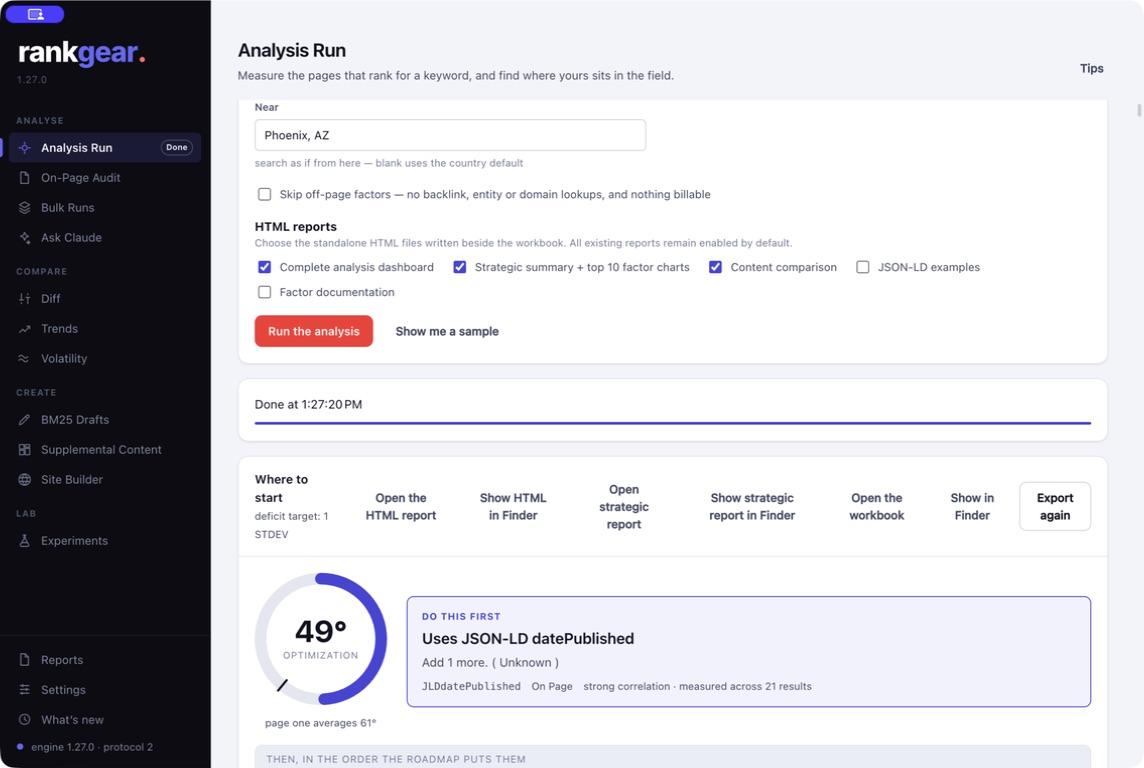
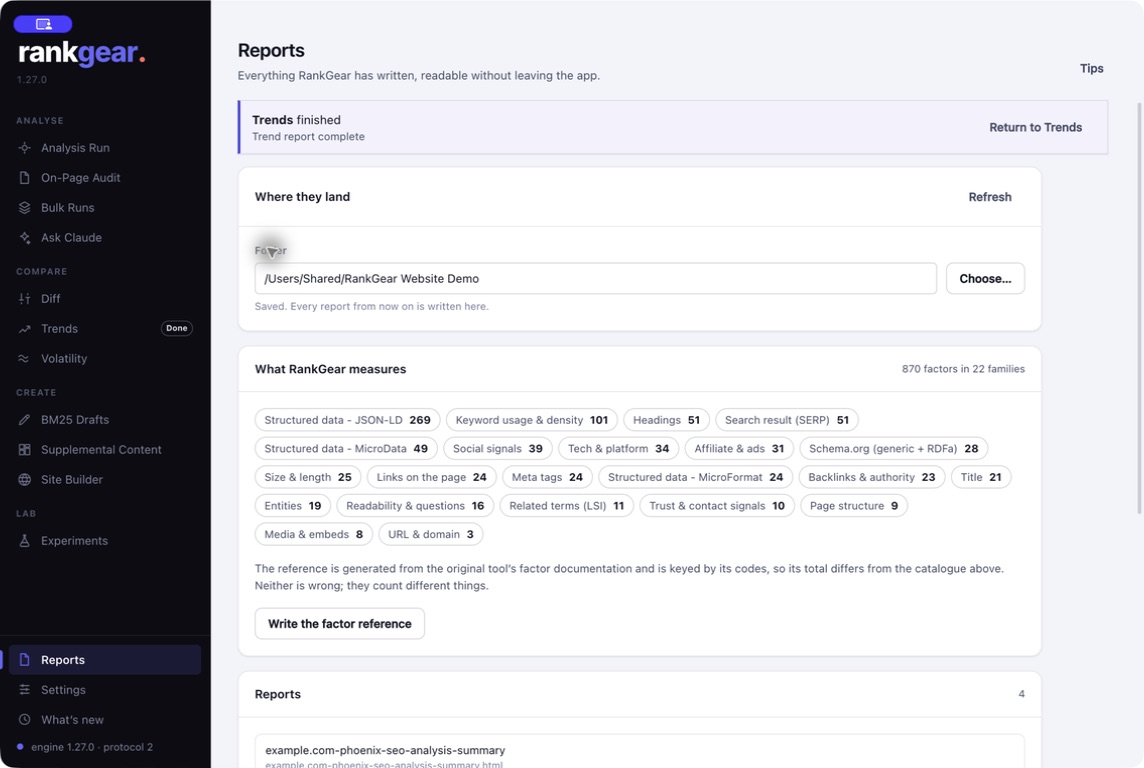
- RankGear - Good for tracking ranking factors tied to specific queries and getting actionable plans based on evidence.
- Ahrefs - Excellent for backlink analysis and content gap research.
- Semrush - Strong for keyword difficulty data and competitor comparison.
- Google Search Console - Free and essential for seeing your actual clicks, impressions, and average position.
- Moz - Useful for domain authority trends and SERP feature tracking.
Use two or three of these consistently rather than trying to monitor everything. The goal is insight, not data overload.
Final Thoughts on Staying Ahead
SEO trend analysis is not about predicting the future. It is about noticing the present more clearly. When you watch your data over time, you see the small changes before they become big problems. You also see opportunities that a one-time audit would miss.
The sites that win in organic search are not the ones with the most backlinks or the fastest pages. They are the ones that adapt as the landscape changes. They treat SEO as a continuous practice, not a project with a finish line.
Start with a baseline. Watch the trend. Act on patterns, not on noise. That is the difference between reacting to Google updates and staying ahead of them.